

La guida completa alle borse termiche per le avventure all'aria aperta: dalle escursioni giornaliere al campeggio di più giorni.
09-05-2026
A cooler bag on a day hike carries sandwiches and water. On a multi-day backpacking trip, it protects the fresh food that keeps morale intact. On a family camping weekend, it's the center of the picnic table. Same category. Completely different demands.
After 21 years manufacturing cooler bags for US clients ranging from national outdoor retailers to Kickstarter-launched adventure brands, we've learned that the buyers who thrive are the ones who match design to scenario—not the ones who buy the cheapest option and hope it works everywhere.
Here's how cooler bag engineering maps to actual outdoor use, with the specifications, price architecture, and retail strategies that separate successful product lines from markdown inventory.
Scenario 1: Day Hiking (2–6 Hours, 3–8 Miles)
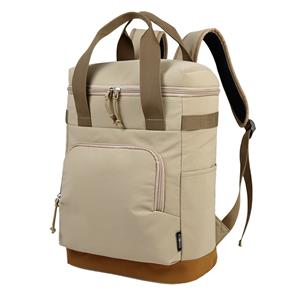
The day hiker's cooler bag lives in a backpack or hangs from a hip belt. Weight is the enemy. Every ounce matters when you're gaining elevation.
The Physics Problem: Standard picnic coolers assume flat ground and casual carrying. Hikers need vertical stability, body-hugging profiles, and one-handed access while moving.
| Demand | Design Response | Critical Specification |
|---|---|---|
| Weight minimization | <1kg empty, 8–12L capacity | Fabric: 420D–600D ripstop nylon, no rigid structure |
| Body movement integration | Backpack format, sternum strap, load lifters | Load distribution: 60% hips, 40% shoulders via hip belt |
| Trail access speed | Front-loading or top-zip, no deep digging | Zipper: YKK #5 coil, one-hand operation, glove-compatible pulls |
| Sweat management | Breathable back panel, 3D mesh channels | Airflow channel design, moisture-wicking contact surfaces |
The Common Mistake: Overspecifying insulation. Day hikers refill ice at trailheads or finish contents within 4 hours. 10mm foam adds 200g with no practical benefit. 6mm EPE + aluminum film achieves 4-hour retention at half the weight.
Obaili Specification Reference: 600D RPET shell (GRS-certified), 6mm EPE + aluminum film, 0.9kg empty weight, 10L capacity, sternum strap with emergency whistle, hydration tube port, $8.50–11.00 FOB Xiamen.
Retail Price Architecture: $24.99–34.99 MSRP. Target channel: REI, Backcountry, specialty outdoor. Margin profile: 65% retail, 40% wholesale.
Scenario 2: Car Camping (1–3 Days, Family Groups)
Car campers treat cooler bags as "portable refrigerators." They open frequently, expect multi-day performance, and punish gear that leaks, collapses, or stains the SUV cargo area.
The Usage Pattern: Friday evening load-in. Saturday breakfast, lunch, dinner, midnight snacks. Sunday brunch. Maybe 40 openings over 48 hours. Ground contact. UV exposure. Occasional rain. Kids stepping on it.
| Demand | Design Response | Critical Specification |
|---|---|---|
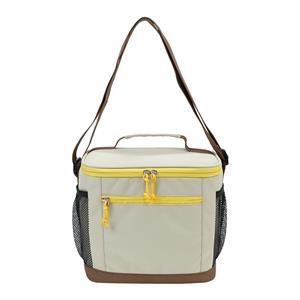
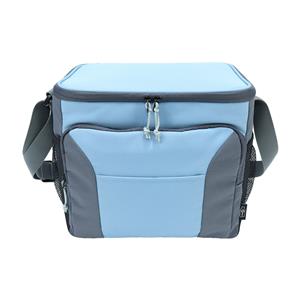
| Family capacity | 24–48L, upright standing | Structured base, anti-tip geometry, 12-can to 24-can sizing |
| Ice retention | 24–48 hours without refill | 10mm EPE minimum, XPE upgrade option for 72-hour performance |
| Ground durability | Abrasion, puncture, UV resistance | 900D base fabric, PU3000mm coating, UV-stabilized thread (AATCC 16, Grade 4+) |
| Organization | Multiple compartments for drinks, food, utensils, ice | Internal dividers, external pocket matrix, dedicated ice compartment |
The Differentiator: Car campers buy cooler bags by the "weekend test." If ice melts by Saturday night, the brand loses credibility permanently. If the bag tips over and spills ketchup on sleeping bags, it's returned.
Obaili Specification Reference: 900D/600D hybrid construction (high-wear areas reinforced), 10mm XPE insulation, TPU-coated #8 zipper, 24L/36L/48L size run, integrated bottle opener, $14.00–22.00 FOB.
Retail Price Architecture: $39.99–69.99 MSRP. Target channel: Dick's, Academy, Walmart outdoor. Margin profile: 55% retail, 35% wholesale. High turnover, seasonal concentration.
Scenario 3: Backpacking / Multi-Day Trekking (3–7 Days, Backcountry)
True backpacking cooler bags serve a paradox: they must keep food cold in an environment where refrigeration doesn't exist, while adding minimal weight to a load already constrained by tent, sleeping bag, and water.
The Reality Check: Most backpackers don't carry cooler bags. They use frozen food for the first night, then shift to non-perishables. The 48-hour retention spec serves a specific segment: guided trips, base camp scenarios, or luxury backcountry experiences where fresh food is part of the value proposition.
| Demand | Design Response | Critical Specification |
|---|---|---|
| Extreme weight sensitivity | <1.5kg for 15L capacity | Ultralight 210D ripstop nylon, minimal structure, no rigid base |
| Compression packing | Collapsible when empty | Soft-sided, foam panels removable for gear-only use |
| Extended retention | 48–72 hours with minimal ice | Vacuum-insulated panel (VIP) upgrade option (adds 300g, doubles retention) |
| Multi-use versatility | Doubles as dry bag, gear organizer | Roll-top closure option, D-ring attachment points, carabiner loops |
The Engineering Tradeoff: VIP panels (used in high-end thermoses) add $12–18 to BOM cost but enable performance impossible with foam alone. For a $120 retail backpacking cooler, the upgrade is justified. For a $40 model, it's fatal to margins.
Obaili Specification Reference: 210D ripstop nylon, removable VIP panels (optional), 1.2kg empty, 15L, roll-top + zip hybrid closure, $18.00–25.00 FOB (low volume, high margin).
Retail Price Architecture: $79.99–129.99 MSRP. Target channel: REI, specialty mountaineering, direct-to-consumer. Margin profile: 70% retail, 45% wholesale. Niche volume, brand prestige.
Scenario 4: Water Sports (Kayak, SUP, Beach, Boat)
Water sports cooler bags face a unique threat: submersion. Not splashing. Submersion. A bag that falls overboard in 20 feet of water must float, or it sinks with $40 of beverages and a phone.
| Demand | Design Response | Critical Specification |
|---|---|---|
| Submersion resistance | True waterproofing, not splash resistance | Welded seams (not stitched), IPX6 minimum, airtight zipper (YKK Aquaguard or equivalent) |
| Floatation | Doesn't sink if dropped | Closed-cell foam provides inherent buoyancy, 15L bag supports 5kg load |
| Sand/salt resistance | Facile da pulire, resistente alla corrosione. | Componenti in acciaio inossidabile o plastica di grado marino, tappo di scarico per il risciacquo |
| Fissaggio sicuro | Compatibilità dell'attrezzatura di coperta | Punti di fissaggio universali, integrazione con elastici, base antiscivolo |
Il costo realeI veri modelli a prova di immersione richiedono gusci rivestiti in TPU e una costruzione saldata, con un costo da 2,5 a 3 volte superiore rispetto alle borse termiche morbide standard. Il mercato è più ristretto, ma estremamente fedele. Un canoista che perde una borsa a causa di una perdita diventa un sostenitore a vita del marchio che non ha deluso le aspettative.
Riferimento alle specifiche Obali: Tessuto 420D rivestito in TPU, cuciture completamente saldate, cerniera ermetica, 20 litri, sistema di fissaggio integrato sul ponte, $28,00–35,00 FOB.
Architettura dei prezzi al dettaglioPrezzo consigliato al pubblico: $59,99–79,99. Canale di vendita: West Marine, REI kayak/SUP, negozi specializzati in pagaie. Profilo del margine: 60% vendita al dettaglio, 38% vendita all'ingrosso.
Scenario 5: Picnic in famiglia / Parco / Giardino (Informale, Sociale)
Il segmento di mercato con il volume di vendita maggiore e il più sensibile al prezzo. Questi acquirenti non leggono le schede tecniche. Acquistano in base al colore, alla notorietà del marchio e al fatto che la borsa stia bene a un barbecue di quartiere.
| Richiesta | Risposta progettuale | Specifiche critiche |
|---|---|---|
| Attrazione estetica | Colore, fantasia, "degno di Instagram" | Palette di colori in linea con le tendenze, motivi stagionali, base neutra con accenti pop |
| visibilità sui social | Posizionamento del logo, riconoscimento del marchio | Marchio esterno discreto, logo interno a sorpresa (apri la cerniera per scoprirlo) |
| Facilità d'uso | Nessuna curva di apprendimento, intuitivo | Ampia apertura, cerniera semplice, manici comodi |
| percezione del valore | Sembra più costoso di quanto non sia | Dettagli di pregio: inserti in pelle, componenti metallici, logo in rilievo. |
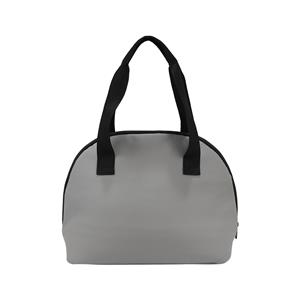
L'analisi di marketingQuesto segmento di consumatori acquista borse termiche come accessori sociali, non come attrezzature. La borsa fa parte dell'estetica del picnic. Appare nei post di Instagram. È un segnale di gusto e stile di vita.
Riferimento alle specifiche Obali: 600D con rivestimento in PU, EPE da 8 mm, disponibile nelle taglie 12L/18L/24L, blocchi di colore alla moda, $7,50–12,00 FOB.
Architettura dei prezzi al dettaglioPrezzo consigliato al pubblico: $19,99–34,99. Canale di vendita: Target, Amazon, TJX/Marshalls. Profilo dei margini: 50% vendita al dettaglio, 30% vendita all'ingrosso. Volume più elevato, margine più basso, dipendente dalle tendenze.
Architettura di dimensioni e prezzi per l'acquirente al dettaglio
| Livello | Capacità | Caso d'uso principale | Prezzo di listino consigliato | Profilo del margine | Esempio di canale |
|---|---|---|---|---|---|
| Iscrizione | 6–10L | Pranzo, gita di un giorno, omaggio | $14,99–24,99 | Elevato fatturato, basso margine di profitto | Amazon Basics, Walmart |
| Nucleo | 12–24L | Escursione giornaliera, spiaggia, picnic | Da 29,99 a 49,99 dollari | Volume/margine bilanciato | REI, Dick's, Academy |
| premi | 24–36L | Campeggio in auto, famiglia | Da 59,99 a 89,99 dollari | Minore fatturato, margini più elevati | REI, Backcountry |
| Specialità | 15–20L | Escursionismo con zaino in spalla, sport acquatici | $79,99–129,99 | Nicchia, costruzione del marchio | Specialità, DTC |
| Medico/Tecnico | 8–24L | Farmaceutico, PCM | $150–400 | Contratto B2B, conformità | Vendita diretta |
La decisione di approvvigionamento: quando personalizzare o utilizzare soluzioni standard?
| Situazione | Raccomandazione | cronologia | MOQ |
|---|---|---|---|
| Lancio di un nuovo marchio, domanda non ancora dimostrata | Personalizzazione standard con solo logo | 4-6 settimane | 500–1.000 |
| Programma stagionale, vendita al dettaglio consolidata | Combinazione di colori personalizzata, stampo esistente | 8-10 settimane | 2.000–3.000 |
| Codice articolo principale, volume annuo >10K | Completamente personalizzato, stampo dedicato | 12–16 settimane | Oltre 5.000 |
| Premium/DTC, differenziazione del marchio | Progettazione ODM completa e proprietaria. | 16-20 settimane | Oltre 3.000 |
Cerchi borse termiche per canali esterni?
[Ottieni una raccomandazione di specifiche adatta allo scenario →]
Oppure [scarica il nostro manuale di categoria sulle borse termiche per attività all'aperto] (struttura completa delle dimensioni, matrice di selezione dei materiali, calendario stagionale e modello di margine per gli acquirenti al dettaglio).
[Ottieni una raccomandazione di specifiche adatta allo scenario →]
Oppure [scarica il nostro manuale di categoria sulle borse termiche per attività all'aperto] (struttura completa delle dimensioni, matrice di selezione dei materiali, calendario stagionale e modello di margine per gli acquirenti al dettaglio).